As Private Markets Go Mainstream, Compliance Expectations Rise
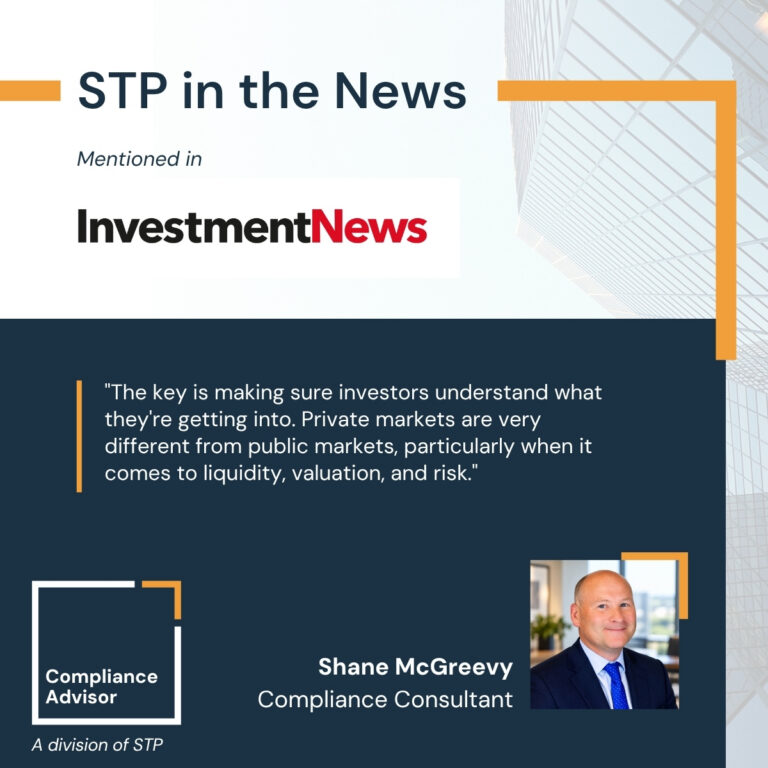
Featured In: InvestmentNews
Shane McGreevy, Compliance Consultant at STP Investment Services, was featured in a recent InvestmentNews article examining the SEC’s latest proposals to expand retail investor access to private markets. The proposals could increase opportunities for alternative investment managers while also introducing new operational, governance, and compliance requirements.
The Bigger Picture
The SEC has proposed several initiatives designed to broaden access to private market investments. Among the proposals are changes that would allow advisors to regulated funds to earn performance-based fees under specific conditions, provide greater flexibility for interval funds, and potentially expand accredited investor eligibility to holders of professional designations such as CFP, CFA, and CPA credentials.
While these proposals may appear deregulatory at first glance, many industry participants believe they could significantly increase compliance and operational demands for alternative investment managers. Firms that have historically focused on institutional and high-net-worth investors may need to adapt to regulated fund structures that require enhanced governance, independent oversight, liquidity monitoring, valuation controls, and investor disclosures.
As private market investing continues to move into the wealth management channel, the industry’s challenge will be balancing broader access with appropriate investor protections.
Key Takeaways
- The SEC is proposing measures that could expand retail access to private markets.
- CFP, CFA, and CPA credential holders may qualify as accredited investors under the proposal.
- Alternative investment managers may face higher expectations around governance and compliance.
- Valuation oversight will remain critical as private market products reach a broader audience.
- Liquidity management and redemption governance may become increasingly important.
- Investor education and disclosure will play a key role in supporting broader adoption.
Shane McGreevy’s Perspective
As discussed in the article, expanding access should not come at the expense of investor protections.
“That’s really the balance the SEC needs to strike: how do you give more investors access without losing the protections that are there for a reason? You can see pieces of that taking shape in the SEC’s proposals around interval funds and performance-based compensation.”
— Shane McGreevy, Compliance Consultant, STP Investment Services
McGreevy also emphasized that investor understanding is just as important as investor access.
“The key is making sure investors understand what they’re getting into. Private markets are very different from public markets, particularly when it comes to liquidity, valuation, and risk.”
— Shane McGreevy, Compliance Consultant, STP Investment Services
What This Means for Alternative Investment Managers
For many alternative asset managers, broadening access beyond institutional and high-net-worth investors may require meaningful changes to operating models and compliance frameworks.
Private investments often involve assets that are less liquid, more difficult to value, and subject to longer investment horizons than traditional public market securities. As these products reach a wider audience, regulators and investors are likely to place greater emphasis on valuation methodologies, liquidity policies, investor disclosures, and governance practices.
Managers may also need to strengthen internal controls and oversight mechanisms to support regulated fund structures. Independent governance, consistent valuation practices, stress testing, and transparent investor communication are becoming increasingly important as private markets evolve.
Firms that proactively invest in compliance infrastructure and operational readiness may be better positioned to take advantage of growing demand while maintaining investor confidence.
Action Steps for Compliance Leaders
- Review valuation policies and governance frameworks supporting private market investments.
- Assess liquidity management processes and redemption procedures.
- Evaluate investor disclosure materials for clarity and transparency.
- Strengthen oversight practices related to regulated fund structures.
- Prepare compliance programs for increased regulatory scrutiny as retail participation grows.
- Educate investors about liquidity, valuation, and risk considerations associated with private market investing.
Frequently Asked Questions
What is private market retailization?
Private market retailization refers to efforts to expand access to private investment opportunities beyond traditional institutional and accredited investor channels.
Why is the SEC considering these changes?
The SEC is exploring ways to broaden investment opportunities while maintaining investor protections and market integrity.
How could these proposals impact investment managers?
Managers may face increased compliance, governance, disclosure, valuation, and liquidity management requirements.
Why are valuation controls important in private markets?
Private assets often lack readily available market prices, making robust valuation processes critical for ensuring fair and accurate investor reporting.
What role does investor education play?
Investor education helps ensure that participants understand the unique liquidity, valuation, and risk characteristics of private market investments.
How might interval funds be affected?
The SEC is proposing changes that would allow interval funds greater flexibility around repurchases and liquidity management.
Why It Matters
The expansion of private market access represents one of the most significant shifts currently shaping the investment management industry. While broader access may create new growth opportunities for managers and investors, it also introduces greater expectations around governance, valuation oversight, liquidity management, and investor education. Organizations that successfully balance innovation with investor protection will be best positioned as private markets continue their evolution into the wealth management channel.