What the SEC’s 2027 Exam Priorities Mean for Investment Firms
Featured In: 401(k) Specialist
Lori Weston, Head of Compliance at STP Investment Services, was featured in a recent 401(k) Specialist article examining the SEC Division of Examinations’ Fiscal Year 2027 priorities and the areas regulators believe warrant heightened attention.
The priorities span investment adviser fiduciary obligations, conflicts of interest, complex and illiquid products, private funds and private credit, operational resilience, cybersecurity, emerging technologies, and evolving market infrastructure.
Read the original article on 401(k).com
The Bigger Picture
The SEC’s Fiscal Year 2027 Examination Priorities arrive at a time when the investment landscape is evolving rapidly. Private assets are reaching broader investor audiences, technology is becoming increasingly embedded in financial services, and firms continue to introduce new products and business models.
Against that backdrop, the SEC is maintaining its focus on foundational adviser responsibilities while directing attention toward emerging areas of potential risk.
Investment adviser fiduciary obligations, conflicts of interest, investment recommendations, and compliance programs remain priorities. At the same time, the SEC is highlighting retail investor exposure to complex, higher-risk, and illiquid products, including private funds, private credit, and other complex investment strategies.
Emerging technologies are another important component. The SEC specifically identifies advanced technology among areas that may affect market operations, compliance, fraud prevention, and investor protection.
Together, these priorities reinforce the importance of maintaining compliance programs that evolve alongside firms’ products, technology, and operating models.
Key Takeaways
- Investment adviser fiduciary obligations and conflicts of interest remain core SEC examination priorities.
- Complex, higher-risk, and illiquid products will receive heightened attention, particularly where retail investors are involved.
- Private funds, private credit, and other complex investment strategies remain specific examination focus areas.
- Cybersecurity, operational resilience, and protection of customer information continue to be priorities.
- Emerging technologies are increasingly part of the SEC’s examination framework.
- Evolving market infrastructure, including tokenization and Treasury clearing reforms, also factors into the 2027 examination landscape.
Lori Weston’s Perspective
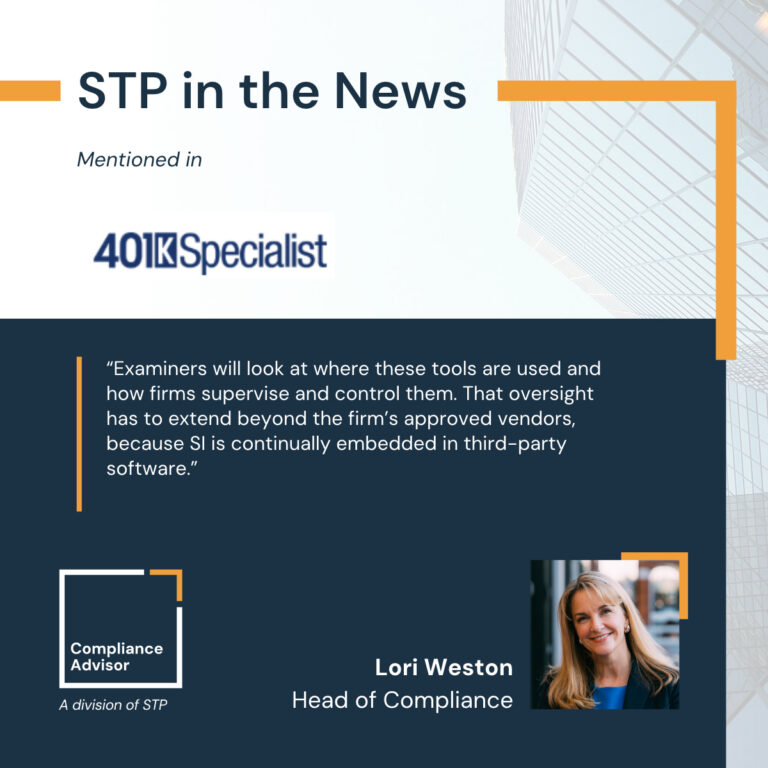
As highlighted in 401(k) Specialist, Lori Weston emphasized that firms’ technology oversight needs to account for AI capabilities that may exist beyond explicitly approved AI vendors.
“Examiners will look at where these tools are used and how firms supervise and control them. That oversight has to extend beyond the firm’s approved vendors, because SI is continually embedded in third-party software.”
— Lori Weston, Head of Compliance, STP Investment Services
Lori Weston also pointed to third-party technology oversight and employees’ use of personal AI accounts for business as issues that can intersect with recordkeeping and Regulation S-P compliance.
What This Means for Investment Advisers
The breadth of the SEC’s 2027 priorities reinforces an important point for investment advisers: examination readiness increasingly spans traditional compliance responsibilities and emerging business risks.
As firms introduce new strategies, expand private market offerings, adopt new technologies, or change the way they serve investors, compliance programs should continue to reflect the risks associated with those activities.
For advisers offering private funds, private credit, or other complex and illiquid strategies, investor protection is particularly relevant. The SEC has specifically identified retail investor protection in connection with complex, higher-risk, and illiquid products as a 2027 focus.
Technology creates another layer of complexity. AI capabilities can enter a firm’s environment through third-party systems as well as dedicated AI platforms, making vendor oversight, information protection, recordkeeping, and governance increasingly interconnected.
The 2027 priorities therefore provide firms with an opportunity to assess whether their compliance programs have kept pace with changes across products, technology, clients, and operations.
Action Steps for Compliance Leaders
Based on the areas identified by the SEC, firms may want to consider:
- Reviewing conflicts of interest and processes surrounding investment recommendations.
- Evaluating compliance controls for complex and illiquid products.
- Reviewing private fund and private credit risk disclosures and related compliance procedures.
- Assessing cybersecurity and operational resilience programs.
- Reviewing oversight of third-party technology providers.
- Assessing how AI and other emerging technologies are being used throughout the organization.
- Reviewing customer information protections and applicable Regulation S-P controls.
These are practical considerations based on the SEC’s stated areas of examination focus, not new requirements created by the priorities themselves. The SEC expressly states that its examination priorities have no legal force or effect and do not create new obligations.
Frequently Asked Questions
What are the SEC’s 2027 Examination Priorities?
The annual priorities identify areas the Division of Examinations believes currently present heightened risks to investors or market integrity and help guide its risk-based examination program.
Are private markets a 2027 SEC examination focus?
Yes. Private funds, private credit, complex strategies, and retail exposure to higher-risk and illiquid investments are among the SEC’s stated areas of focus.
Is AI included in the SEC’s 2027 priorities?
Yes. Emerging technologies are specifically identified in connection with market operations, compliance, fraud prevention, and investor protection.
What fiduciary issues will examiners consider?
The priorities include investment advisers’ fiduciary obligations, conflicts of interest, investment recommendations, and compliance programs.
Does cybersecurity remain a priority?
Yes. Operational resilience, cybersecurity, and protection of customer information remain key examination areas.
Do the examination priorities create new SEC requirements?
No. The Division states that the priorities themselves do not create new legal obligations or alter applicable law.
Why It Matters
The SEC’s 2027 Examination Priorities reflect an investment landscape where traditional fiduciary responsibilities increasingly intersect with private markets, emerging technologies, cybersecurity, and evolving investor access.
For investment advisers, examination readiness therefore requires more than reacting to individual regulatory developments. Firms should understand how changes in products, technology, third-party relationships, and client populations affect their existing compliance obligations and risk profiles.
As financial services continue to evolve, strong compliance programs will need to evolve with them.